 TL;DR
TL;DR
- This guide is ideal for students aiming to study abroad, professionals seeking global opportunities, and anyone preparing for the TOEFL exam. Regular TOEFL practice tests and TOEFL mock tests help build confidence and readiness.
- Taking TOEFL mock tests familiarizes you with the test structure, timing, and question types, helping reduce exam anxiety and improve performance under real exam conditions.
- TOEFL practice tests reveal which sections need improvement, whether it’s Reading, Listening, Speaking, or Writing, allowing for a focused and effective study plan.
- Practicing full-length TOEFL mock tests trains you to pace yourself, manage the 4-hour exam efficiently, and avoid rushing through difficult questions.
- Combining free and paid TOEFL practice tests, official ETS materials, and section-specific exercises ensures strategic preparation, accurate scoring, and targeted skill improvement.
Related Blog
The TOEFL (Test of English as a Foreign Language) is one of the most widely recognized English proficiency exams in the world. It is essential for students aiming to study abroad, professionals seeking global career opportunities, and anyone who needs to demonstrate strong English skills for academic or professional purposes. Performing well on the TOEFL can open doors to top universities, scholarships, and international job opportunities.
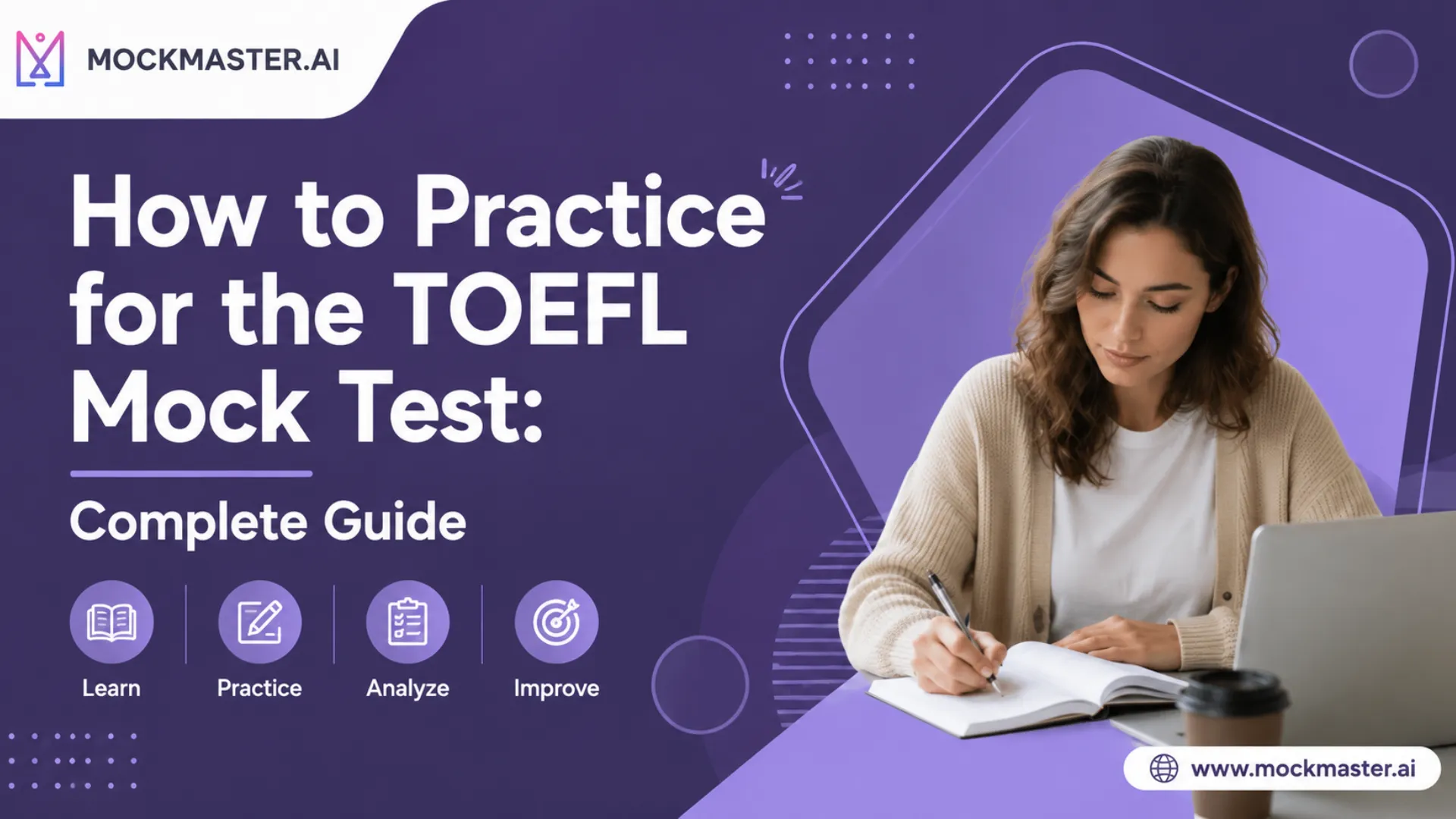
One of the most effective ways to prepare for the TOEFL is through TOEFL practice tests and TOEFL mock tests. These tools simulate real exam conditions, helping you familiarize yourself with question types, manage your time effectively, and identify areas that need improvement. Unlike casual studying, mock tests allow you to track your progress and develop a strategic approach to each section of the exam.
The goal of this guide is to help you prepare smarter, not just harder. By integrating TOEFL practice tests and mock tests into your study routine, you can maximize your performance, minimize surprises on test day, and confidently aim for your target score. If you’re preparing for the TOEFL, taking regular TOEFL practice tests and mock tests can dramatically improve your score and boost your overall exam readiness.
Why You Should Take TOEFL Practice Tests
Preparing for the TOEFL isn’t just about studying English,it’s about understanding the exam format, timing, and strategy. This is where TOEFL practice tests and TOEFL mock test become invaluable tools. Here’s why every serious TOEFL candidate should include them in their preparation:
Understand Real Exam Conditions
Taking a TOEFL mock test allows you to experience the exam just as it will happen on test day. You’ll get familiar with the timing, question types, and overall pace of the exam, so there are no surprises on the actual day. This simulated environment helps you approach the real test with confidence.
Identify Strengths and Weaknesses
A TOEFL practice test isn’t just about a score,it shows you which skills need improvement. Whether it’s reading comprehension, listening accuracy, speaking fluency, or writing clarity, practice tests reveal where you excel and where you need targeted practice.
Build Time Management Skills
One of the biggest challenges in TOEFL is completing all sections within the time limits. By taking full-length TOEFL test practice, you learn how to pace yourself, allocate time to each question type, and avoid rushing through critical parts of the exam.
Reduce Exam Anxiety
Repeated exposure to mock tests makes the exam feel familiar, reducing nervousness and boosting your confidence. The more often you practice, the more comfortable you become with the format, which can positively impact your performance on the real test.
Types of TOEFL Practice Tests
When preparing for the TOEFL, not all practice is created equal. Understanding the different types of TOEFL practice tests can help you target your preparation and maximize your score. Broadly, practice tests fall into two categories: full-length mock tests and section-specific practice tests.
a) Full-Length TOEFL Mock Tests
Duration & Format:
Full-length TOEFL mock tests typically take around 4 hours to complete, just like the actual exam. They cover all four sections: Reading, Listening, Speaking, and Writing, providing a complete exam experience.
Benefits:
- Complete simulation: Taking a full-length mock test prepares you mentally and physically for the exam’s duration.
- Realistic scoring: You can estimate your actual test score and track improvement over time.
- Strategy development: Learn how to pace yourself across all sections and manage time effectively.
Recommended Tools:
- ETS TestReady: Official practice platform for authentic TOEFL experience.
- TestGlider: AI-scored mock tests with instant feedback.
- Magoosh: Diagnostic tests with strategy guides and progress tracking.
Full-length mock tests are essential for understanding the flow of the TOEFL exam and for measuring your overall readiness.
b) Section-Specific Practice Tests
What They Are:
Section-specific tests focus on one skill at a time,Reading, Listening, Speaking, or Writing. These exercises are shorter and more targeted than full-length mock tests, allowing you to drill down on your weak areas.
Benefits:
- Strengthen weaknesses: Focused practice helps improve skills that need extra attention.
- Flexible timing: Can be completed in shorter study sessions, fitting into daily routines.
- Skill mastery: Repeated exposure to similar question types builds accuracy and confidence.
Resources & Apps:
- Reading & Listening: ETS sample questions, BestMyTest exercises, and online reading/listening drills.
- Speaking & Writing: Magoosh speaking prompts, TestGlider practice, and TOEFL prep apps with timed responses.
Section-specific practice is perfect for fine-tuning individual skills, complementing full-length mock tests to create a balanced preparation plan.
Best Online Platforms for TOEFL Practice
Choosing the right resources can make or break your TOEFL preparation. With so many options available, it’s crucial to focus on platforms that provide accurate scoring, realistic exam simulations, and actionable feedback. Below is a curated guide to the best online platforms for TOEFL practice, including free, official, and premium options.
a) Official ETS Resources
What They Offer:
- TestReady: Full-length, official TOEFL mock tests designed by the creators of the exam.
- Sample questions & downloadable PDFs: Section-wise exercises that allow flexible, self-paced practice.
Why They’re Valuable:
- Most authentic TOEFL experience: Practicing with ETS resources ensures you are exposed to the exact question types, scoring criteria, and timing of the real exam.
- Reliable scoring & feedback: Official scores give a true reflection of your current level, helping you set realistic goals.
Best For: Students who want accurate TOEFL practice tests and to benchmark their performance against official standards.
Pro Tip: Always start with at least one ETS full-length test to understand your baseline score before moving to other platforms.
b) Free Online Practice Tests
Top Platforms:
- TestGlider: Offers AI-powered TOEFL mock tests with instant scoring and detailed section-wise analysis.
- BestMyTest: Provides multiple sample tests with immediate answers and quick performance tracking.
Why Use Them:
- Ideal for early-stage preparation: Helps you familiarize yourself with the TOEFL format without pressure.
- Stress-free learning: You can explore all question types, identify weak areas, and gain confidence before attempting full-length tests.
- Accessibility: Free access makes them perfect for students starting TOEFL test practice on a budget.
Best For: Learners who need frequent TOEFL practice tests to build familiarity and confidence, especially in Reading and Listening sections.
Pro Tip: Use free tests to identify weak sections and then combine them with targeted section-specific practice for maximum improvement.
c) Paid Platforms
Top Platform:
- Magoosh: Offers structured TOEFL preparation including diagnostic tests, study schedules, personalized strategies, and score predictions.
Why They’re Worth It:
- Detailed analytics: Know exactly where you are losing points and how to fix mistakes.
- Progress tracking: Monitor performance over time to ensure continuous improvement.
- Strategic approach: Combines realistic practice with expert test-taking strategies to improve scores efficiently.
Best For: Students aiming for top-tier TOEFL scores who want a structured, data-driven approach to practice.
Pro Tip: Paid platforms are most effective after familiarizing yourself with the exam through free tests and official ETS resources. This way, you can focus your investment on strategies that matter most.
Smart Preparation Strategy:
- Step 1: Start with free online TOEFL practice tests to familiarize yourself with the format.
- Step 2: Use official ETS mock tests to gauge your real performance and set goals.
- Step 3: Integrate paid platforms like Magoosh for detailed analytics, strategy, and focused improvement.
This blended approach ensures you get volume, accuracy, and strategy, all of which are essential to maximize your TOEFL score.
How to Create an Effective TOEFL Test Practice Plan
A well-structured plan is the key to achieving a high score on the TOEFL. Simply taking random practice tests won’t be enough,you need a strategic approach that balances full-length mock tests, targeted skill improvement, and daily section practice. Here’s how to create an effective TOEFL test practice plan.
a) Determine Your Timeline
Your study strategy should depend on how much time you have before the exam:
- 2+ Months:
- Take a diagnostic TOEFL mock test to identify strengths and weaknesses.
- Dedicate 2–3 days per week to full-length practice tests.
- Allocate the remaining time for skill-focused exercises and vocabulary building.
- 1–2 Months:
- Take at least one full-length TOEFL practice test per week.
- Focus more heavily on weak sections identified in diagnostic tests.
- Include shorter daily practice sessions to maintain consistency.
- Less Than 1 Month:
- Take 2–3 full-length TOEFL mock tests under strict exam conditions.
- Prioritize your weakest sections with daily targeted practice.
- Use official ETS sample questions for quick, high-quality practice.
Pro Tip: Knowing your timeline helps you allocate resources effectively and avoid last-minute cramming.
b) Schedule Mock Tests
- Timing: Take full-length mock tests under exam conditions (quiet room, timed sections, no distractions).
- Frequency:
- Beginners: Once every 2–3 weeks.
- Intermediate/Advanced: Once per week.
- Review Sessions: Spend as much time reviewing your answers as you do taking the test. Identify recurring mistakes, timing issues, and sections that need focused practice.
Pro Tip: Treat every mock test like the real exam to build endurance, pacing, and confidence.
c) Focus on Weak Skills
- After each mock test, analyze your results section by section:
- Which reading question types do you consistently miss?
- Are your listening notes incomplete or inaccurate?
- Do your speaking responses lack clarity or structure?
- Are your writing essays missing key points or grammar accuracy?
- Create a focused improvement plan targeting these weak areas.
- Repeat section-specific practice until you see measurable improvement.
Pro Tip: Strengthening weak skills is often more effective than over-practicing strong sections.
d) Include Daily Section Practice
Consistency is critical for TOEFL success. Even short daily sessions can make a huge difference:
- 20–30 minutes per skill daily: Rotate between Reading, Listening, Speaking, and Writing.
- Use TOEFL test practice exercises from official resources, free online platforms, and paid apps.
- Include mini-tasks like summarizing a reading passage, listening to academic lectures, or writing short essays under time constraints.
Pro Tip: Daily practice ensures skill retention and steadily builds confidence, reducing stress on test day.
How to Analyze Your Mock Test Results
Taking TOEFL mock tests is just the first step,what separates top scorers from average candidates is how effectively they analyze their results. By carefully reviewing your performance, you can identify weaknesses, track improvements, and strategically adjust your TOEFL test practice to maximize your score. Here’s a detailed approach to analyzing your mock test results:
1. Track Scores by Section
- Record your Reading, Listening, Speaking, and Writing scores in a dedicated spreadsheet or study journal after every mock test.
- Include additional details: total score, time spent per section, number of correct/incorrect answers, and question types.
- Tracking scores over time reveals trends,whether certain sections are improving, stagnating, or declining.
Pro Tip: Visualize your progress with graphs or color-coded tables. This makes it easier to spot patterns and motivates consistent improvement.
2. Identify Common Mistakes and Recurring Question Types
- Review all questions you got wrong and categorize the errors:
- Reading: Misunderstood vocabulary, incorrect inference, or skipped details.
- Listening: Missed key information, difficulty identifying main ideas, or confusion with speaker tone.
- Writing: Weak structure, missing points, grammar or coherence issues.
- Speaking: Pronunciation, clarity, incomplete responses, or poor time management.
- Look for recurring problem areas. For example, if you consistently miss “inference” questions in Reading or fail to summarize audio in Listening, these are skills that need targeted practice.
Pro Tip: Focus on recurring errors rather than isolated mistakes. Fixing patterns of mistakes leads to bigger score improvements than random corrections.
3. Reattempt Weak Questions Until You Improve
- Simply noting mistakes is not enough,actively redo questions until you can answer them correctly under timed conditions.
- For Reading and Listening: Re-read passages, re-listen to lectures, and practice answering similar questions.
- For Speaking and Writing: Record multiple responses, compare with high-scoring samples, and refine clarity, grammar, and structure.
Pro Tip: Treat each reattempt as a mini TOEFL practice session. Repetition reinforces learning and builds confidence for test day.
4. Adjust Your Practice Plan Based on Results
- Use your mock test analysis to strategically modify your study plan:
- Allocate more time to weak sections and question types.
- Reduce focus on sections where you consistently perform well.
- Incorporate targeted section-specific practice tests and timed exercises.
- Regularly revising your plan ensures that every study session is focused, efficient, and goal-oriented, turning weaknesses into strengths.
Pro Tip: Combine insights from multiple mock tests. Patterns across different tests reveal your true skill gaps, helping you prioritize the right areas before exam day.
Strategies to Maximize TOEFL Test Practice
Taking TOEFL mock tests or practice exercises is essential, but how you practice determines whether you see real improvement. To get the most out of your TOEFL test practice, you need strategies that build skill, speed, and confidence. Here’s how to make every practice session count:
1. Master Time Management for Each Section
- Reading: Allocate around 20 minutes per passage. Avoid spending too much time on one difficult question.
- Listening: Take concise notes while listening; use remaining seconds to check answers quickly.
- Speaking: Stick strictly to the 45–60 second time limit per response; practice organizing ideas in advance.
- Writing: Spend 5 minutes planning your essay, 20 minutes writing, and 5 minutes revising.
Pro Tip: Use a timer during practice to simulate real exam pressure and develop pacing skills.
2. Practice Under Real Exam Conditions
- Find a quiet, distraction-free environment.
- Take the full-length TOEFL mock test in one sitting to build stamina.
- Avoid pauses, breaks, or external help, just like the actual test.
Pro Tip: Simulating exam conditions regularly reduces test-day anxiety and improves focus.
3. Use Official Answer Keys for Feedback
- After completing practice tests, compare your answers with official keys or reliable answer guides.
- Identify mistakes and categorize them by type: comprehension, vocabulary, grammar, or timing errors.
- This ensures your practice is accurate and aligned with real TOEFL standards.
Pro Tip: Cross-checking answers prevents learning incorrect patterns, a common trap with unofficial resources.
4. Record and Review Speaking Responses
- Record yourself answering Speaking tasks under timed conditions.
- Listen carefully for clarity, pronunciation, grammar, and fluency.
- Compare your responses with high-scoring sample answers and identify areas to improve.
Pro Tip: Recording and replaying your Speaking responses helps you notice issues you wouldn’t catch in real time, improving confidence and articulation.
5. Write Essays Under Time Limits, Then Revise
- Treat every Writing task like a mini TOEFL test session: plan, write, and revise within the time limit.
- After writing, review for grammar, coherence, and completeness.
- Practice multiple essays on different topics to build adaptability and speed.
Pro Tip: Focus on quality and speed,your ability to organize ideas clearly under time pressure is just as important as grammar or vocabulary.
Free vs Paid TOEFL Practice Tests
When preparing for the TOEFL, choosing the right practice resources can make a significant difference in your score. Both free and paid TOEFL practice tests have their advantages and limitations. Understanding these differences will help you design a balanced, effective study plan.
A. Free TOEFL Practice Tests
Pros:
- High Volume: Access multiple tests without cost, allowing frequent practice.
- Familiarization: Great for understanding the exam format, question types, and pacing.
- Low Pressure: Practice freely without worrying about money or scoring.
Cons:
- Limited Accuracy: Scores may not perfectly reflect your performance on the real TOEFL.
- Minimal Feedback: Free tests often provide little guidance on how to improve.
- Outdated Content Risk: Some free resources may not fully reflect the latest TOEFL format.
Best Use: Free tests are ideal for early-stage preparation, gaining confidence, and identifying broad strengths and weaknesses.
B. Paid TOEFL Practice Tests
Pros:
- Accurate Scoring: Many paid platforms (like Magoosh or ETS official tests) closely simulate real TOEFL scoring.
- Detailed Analytics: Receive breakdowns by section, question type, and skill area.
- Personalized Feedback: Get actionable insights to target weak areas.
- Structured Learning: Many include study plans, tips, and strategies to maximize score improvement.
Cons:
- Cost: Accessing premium tests may require payment.
- Limited Volume: You may not get as many practice opportunities compared to free tests.
Best Use: Paid tests are perfect for fine-tuning skills, tracking progress, and preparing under realistic exam conditions.
C. The Blended Approach – Best of Both Worlds
For optimal TOEFL test practice, combine free and paid resources:
- Start with free tests to familiarize yourself with the format and identify weak areas.
- Switch to paid tests to get accurate scoring, analytics, and targeted strategies.
- Continue mixing both types throughout your prep to maintain volume, track improvement, and build confidence.
This blended approach ensures that your TOEFL practice tests are not just frequent, but strategic, accurate, and actionable, giving you the best chance to achieve a top score.
Common Mistakes to Avoid During TOEFL Test Practice
Even the best preparation can fall short if you make common mistakes while taking TOEFL practice tests. Avoiding these pitfalls ensures that every practice session contributes meaningfully to your score improvement. Here are the key mistakes to watch out for:
1. Not Simulating Exam Conditions
- Many students practice in a relaxed environment, without timing themselves or removing distractions.
- The TOEFL is a timed, high-pressure test; failing to replicate real exam conditions can lead to poor time management and unexpected anxiety on test day.
Tip: Always take TOEFL mock tests in a quiet space, use timers, and follow the exact section limits to build stamina and focus.
2. Ignoring Review of Mistakes
- Simply completing practice tests without analyzing errors is a wasted effort.
- Every incorrect answer is an opportunity to learn grammar, vocabulary, or strategy.
Tip: After each TOEFL practice test, spend time reviewing mistakes, categorizing errors, and practicing similar questions until you improve.
3. Overloading on Practice Tests Without Analysis
- Some students take test after test without reflecting on their performance, hoping quantity alone will lead to higher scores.
This approach often leads to frustration, burnout, and little real improvement.
Tip: Balance is key. Take fewer full-length mock tests with focused review sessions rather than doing many tests without analyzing results.
4. Neglecting Weaker Sections
- It’s common to focus on strong areas and avoid practicing weaker sections, but this can limit your overall score.
- The TOEFL is scored section-wise, so even one weak section can lower your total score significantly.
Tip: Identify weak skills through your TOEFL test practice and allocate extra time daily or weekly to strengthen them, using section-specific exercises.
Additional Tips for Effective TOEFL Preparation
Preparing for the TOEFL requires more than just completing practice tests,it’s about building consistent habits, mental endurance, and smart study strategies. Here are some additional tips to make your TOEFL test practice more effective and efficient:
1. Take Regular Breaks to Avoid Burnout
- Long study sessions can lead to fatigue and reduced retention.
- Schedule short breaks every 50–60 minutes during study sessions to recharge your focus.
- Use breaks for light exercise, hydration, or relaxation to maintain energy levels.
Tip: Treat breaks as part of your preparation strategy. A refreshed mind improves comprehension, speed, and accuracy in practice tests.
2. Focus on Both Speed and Accuracy
- TOEFL sections are timed, so working quickly is essential, but rushing can lead to careless mistakes.
- Balance speed and accuracy by practicing under timed conditions and reviewing errors carefully.
- Use strategies like skimming passages, taking concise notes, and eliminating obviously wrong answers to save time.
Tip: During TOEFL practice tests, measure both time per question and correct answers to optimize your pacing.
3. Use Official Vocabulary Lists
- Vocabulary plays a key role in Reading, Listening, and Writing sections.
- Use ETS’s official TOEFL word lists or trusted prep books to focus on high-frequency words.
- Regularly test yourself using flashcards or spaced repetition apps to retain new words effectively.
Tip: Integrate vocabulary practice into your daily routine, even in small sessions, to steadily build mastery.
4. Join TOEFL Forums or Study Groups for Peer Support
- Engaging with peers allows you to share strategies, clarify doubts, and stay motivated.
- Online communities, forums, and study groups provide tips, resources, and feedback that can complement your personal study plan.
- Discussing challenging questions with peers can reveal insights you might miss on your own.
Tip: Set goals with your study group, like weekly speaking or writing practice, to hold yourself accountable and maintain consistency.
Conclusion
Preparing for the TOEFL can feel overwhelming, but with the right strategy, it becomes manageable and even rewarding. TOEFL practice tests and mock tests are your most powerful tools,they help you understand the exam format, identify weaknesses, improve time management, and build confidence.
The key to success is a consistent, strategic TOEFL test practice plan. By combining full-length mock tests, section-specific exercises, daily skill practice, and careful analysis of your mistakes, you can maximize your performance and approach test day with confidence.
Take Action Now: Don’t wait to start improving your TOEFL score. Try a free TOEFL mock test today or download a structured prep planner to organize your practice, track progress, and stay on track toward your target score.
Remember: Smart, focused practice beats long hours of unfocused study every time. Make each test, each review session, and each practice exercise count,and your TOEFL success will follow.
FAQs
1. What is the difference between a TOEFL practice test and a TOEFL mock test?
A TOEFL practice test targets individual sections, while a TOEFL mock test simulates the full exam. Both improve skills, pacing, and confidence in your TOEFL test practice.
2. How often should I take TOEFL mock tests?
Take a mock test every 2–3 weeks if starting early, weekly closer to the exam, and 2–3 tests in the final month. Regular TOEFL practice tests help track progress and reduce exam anxiety.
3. Should I use free or paid TOEFL practice tests?
Free tests are ideal for early preparation and volume, while paid tests like Magoosh provide accurate scoring, feedback, and analytics. A blended approach optimizes your TOEFL test practice.
4. How do I analyze my TOEFL practice test results effectively?
Track scores by section, note recurring mistakes, reattempt weak questions, and adjust your study plan. Effective analysis of TOEFL practice tests ensures targeted improvement.
5. How can I improve my weak sections?
Focus on section-specific TOEFL practice tests. For Reading/Listening, practice inference and note-taking. For Speaking/Writing, record responses and revise under timed conditions for better results.

Tushar Saluja